
Quick Summary
Improving your home does not always require a major renovation, a contractor, or a large budget. With the right Home Automation & DIY Gear, you can make meaningful upgrades that improve convenience, organization, energy efficiency, security, comfort, and everyday functionality. From smart lighting and connected plugs to practical DIY tools, storage solutions, and simple automation upgrades, today’s homeowners have more affordable options than ever.
This guide explores 15 budget-friendly home improvement ideas designed for U.S. homeowners, renters, DIY enthusiasts, and anyone who wants to upgrade their living space without overspending. Each idea focuses on practical value, ease of installation, long-term usefulness, and the potential to make everyday life easier. Whether you are starting your first smart-home project or looking for affordable tools for your next weekend upgrade, these ideas can help you create a more comfortable, efficient, and connected home.
The Ultimate Home Improvement Guide: 15 Budget-Friendly Ideas
Home improvement often sounds expensive.
However, improving your home does not mean you need to replace your kitchen, remodel your bathroom, or hire a contractor for every project.
In fact, some of the most noticeable improvements can come from relatively small upgrades.
A smart light can make a room more convenient.
A smart plug can automate an ordinary appliance.
A better drill can make DIY projects considerably easier.
Additional storage can reduce clutter and make your existing space feel larger.
Therefore, homeowners should think beyond traditional renovations.
Modern Home Automation & DIY Gear gives homeowners an opportunity to improve their properties gradually. Instead of spending thousands of dollars on one major project, you can complete smaller projects over time and focus your budget on improvements that deliver the most practical value.
This approach also gives you more control.
You decide which rooms need attention, which technologies are useful, and which projects you can complete yourself.
Most importantly, you can adapt your improvements to your lifestyle.
A busy family may prioritize smart lighting and automation. A renter may prefer removable smart-home products. A DIY enthusiast may focus on power tools and workshop equipment. Meanwhile, someone preparing a home for sale may prioritize affordable improvements that make the property look cleaner, more modern, and better organized.
The following 15 ideas provide a strong starting point.
1. Upgrade Traditional Lights With Smart Lighting
Lighting is one of the easiest places to begin a home improvement project.
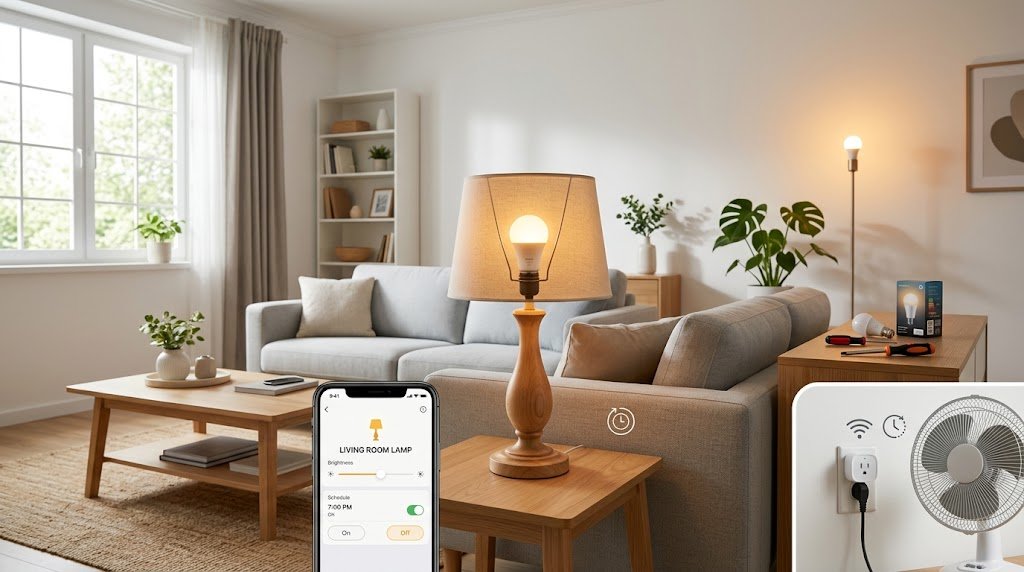
You do not necessarily need to replace your entire lighting system. Instead, smart bulbs can turn compatible fixtures into connected lighting solutions.
Smart bulbs can provide features such as app control, scheduling, dimming, and, depending on the model, voice-assistant integration.
That means you can control lighting without walking across the room.
More importantly, automation can make lighting fit your daily routine.
For example, you can schedule bedroom lights to turn on in the morning or set living-room lights to switch off at a particular time.
You can also create different lighting settings for different activities.
Bright lighting can work well when you need to focus on a task, while softer lighting can create a more relaxed atmosphere in the evening.
Why It Is Budget-Friendly
Smart bulbs allow you to upgrade individual fixtures rather than replacing an entire electrical system.
Start with one room.
If you like the experience, expand gradually.
Best For
- Bedrooms
- Living rooms
- Home offices
- Hallways
- Kitchens
- Apartments
Home Automation & DIY Gear Advantage
Smart lighting combines technology with a relatively simple installation process.
For many compatible bulbs, installation involves removing the existing bulb and installing the smart version.
However, always follow the manufacturer’s compatibility and installation instructions.
2. Add Smart Plugs to Everyday Appliances
Smart plugs are another excellent entry point into home automation.
They allow compatible appliances and electronics to be controlled through an app or, depending on the product, a compatible voice assistant.
Instead of leaving an appliance running unnecessarily, you can create schedules that match your routine.
For example, a lamp can turn on automatically in the evening.
A fan can operate according to a schedule.
A decorative light can switch off automatically at bedtime.
This type of automation may seem small, but several small conveniences can make a home feel significantly more modern.
Why Smart Plugs Offer Strong Value
The biggest advantage is that you can automate existing devices.
You do not need to replace every lamp or appliance with a smart model.
Instead, a compatible smart plug can add connected functionality to an ordinary device.
That makes smart plugs particularly attractive to budget-conscious homeowners.
What to Check Before Buying
Pay attention to the plug’s rated electrical load and the manufacturer’s instructions.
Not every appliance should be connected to every smart plug.
Always verify compatibility before use.
3. Invest in a Reliable Cordless Drill
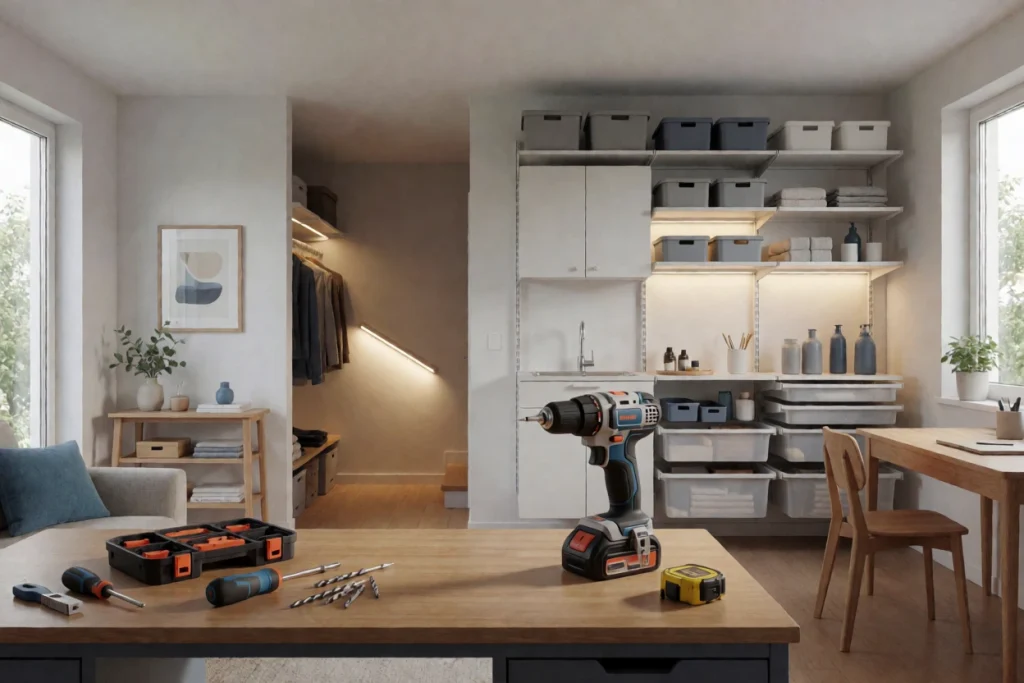
If you want to take DIY projects seriously, a cordless drill is one of the most useful tools you can own.
From installing shelves to assembling furniture, a drill can make numerous household tasks faster and easier.
A cordless design provides flexibility because you do not have to remain close to a wall outlet while working.
Furthermore, modern cordless drills are available in many price ranges.
You do not necessarily need a professional-grade tool for occasional household projects.
Common Uses
A cordless drill can help with:
- Furniture assembly
- Shelf installation
- Cabinet hardware
- Picture hanging
- Small repairs
- DIY storage projects
- Basic woodworking
Why It Belongs in Home Automation & DIY Gear
A smart home still needs physical improvements.
Automation can make your home more convenient, but DIY tools help you physically improve the space.
Therefore, technology and traditional tools work particularly well together.
4. Improve Home Organization With Modular Storage
Sometimes the best home improvement does not involve technology.
Clutter can make even a beautiful home feel smaller and less comfortable.
Fortunately, modular storage can provide an affordable way to improve organization.
Consider adding storage bins, drawer organizers, shelf systems, under-bed storage, or wall-mounted organization where appropriate.
Instead of simply buying more furniture, think about how your existing space can work harder.
For example, unused vertical space can become useful storage.
Closet shelves can be reorganized.
Garage storage can be improved.
Kitchen cabinets can gain additional organization through simple inserts.
Why This Upgrade Matters
Organization improves more than appearance.
It can also make everyday tasks easier.
When frequently used items have dedicated locations, you spend less time searching for them.
Consequently, a relatively inexpensive storage upgrade can deliver ongoing value.
5. Install Motion-Activated Lighting
Motion-activated lighting provides another affordable way to make your home more convenient.
These lights can be particularly useful in areas where you do not always want to reach for a traditional switch.
Think about closets, hallways, garages, entry areas, stairways, and other suitable spaces.
Some systems can activate when movement is detected and switch off after a period of inactivity.
Why It Is a Smart Upgrade
Motion activation can improve convenience while also helping avoid lights being left on unnecessarily.
For families, it can be particularly useful in areas where lights frequently get forgotten.
For renters, battery-powered options can provide a simpler installation approach.
Installation Considerations
Choose products appropriate for the intended location.
If you are installing anything that requires electrical wiring, follow applicable instructions and consider using a qualified professional when necessary.
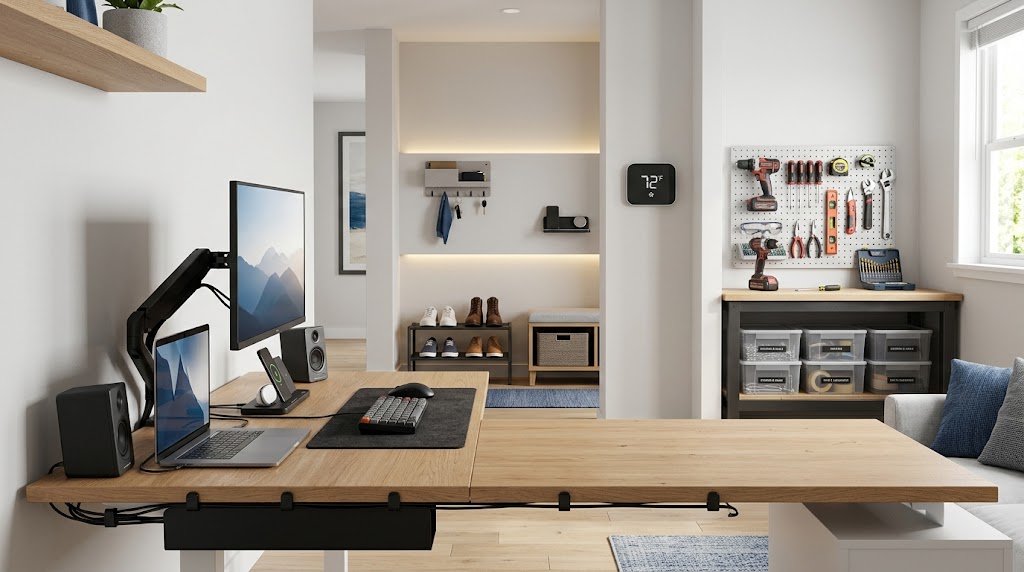
6. Upgrade Your Home Office With Better Cable Management
Home offices have become increasingly important for American households.
However, cables can quickly create a messy workspace.
Chargers, monitors, laptops, speakers, printers, and other devices can create a collection of cables that becomes difficult to manage.
Cable-management products provide an inexpensive way to improve the appearance and functionality of your workspace.
Cable clips, sleeves, under-desk trays, and organizers can help keep cords together and reduce visual clutter.
Why This Is Worth Doing
A cleaner workspace can make your desk easier to use.
You can also reduce the time spent searching for the correct cable.
Furthermore, organizing cables makes it easier to clean around your workstation.
DIY Advantage
This is a simple weekend project that generally requires very little equipment.
A few inexpensive organization products can produce a noticeable visual improvement.
7. Create a Smarter Entryway
The entryway is one of the first parts of your home that you and your guests see.
It also becomes a high-traffic area.
Shoes, keys, bags, packages, jackets, and other items can quickly create clutter.
A simple entryway improvement can therefore make your entire home feel more organized.
Consider adding:
- Key hooks
- Shoe storage
- A small bench
- Wall organizers
- Motion lighting
- Smart lighting
- A charging station
Why It Works
The goal is to give everyday objects a predictable location.
For example, a dedicated key area can prevent the common problem of searching for keys when leaving the house.
Similarly, shoe storage can keep the floor clearer.
Small changes can therefore create a significant improvement in daily convenience.
8. Install a Smart Thermostat
Heating and cooling can represent a significant part of household energy use.
A smart thermostat can provide greater control over temperature settings and, depending on the model, offer scheduling and other connected features.
Instead of manually adjusting your thermostat throughout the day, you can create schedules around your routine.
For example, you may want different settings while you are home, sleeping, or away.
Why Smart Thermostats Are Attractive
The main appeal is control.
A connected thermostat can give you more visibility into your heating and cooling routine.
Some models also offer app-based control, allowing you to adjust settings remotely.
Important Installation Note
Thermostat compatibility varies.
Before purchasing one, verify compatibility with your existing HVAC system and follow the manufacturer’s installation requirements.
If electrical wiring is unfamiliar to you, professional installation can be the safer choice.
9. Upgrade Your DIY Workspace
You do not need a professional workshop to create an effective DIY area.
A small, organized workspace can be enough.
Start with the basics.
A sturdy work surface, good lighting, storage containers, and a few reliable hand tools can transform a corner of your garage, basement, utility room, or other suitable area.
Useful DIY Gear
Consider organizing:
- Screwdrivers
- Pliers
- Measuring tape
- Level
- Utility knife
- Drill
- Drill bits
- Adjustable wrench
- Safety glasses
- Storage boxes
Why Organization Matters
A disorganized toolbox can make a simple repair unnecessarily frustrating.
Instead, arrange tools according to how frequently you use them.
Keep common tools easy to reach while storing specialized equipment separately.
This simple approach can make future DIY projects faster.
10. Improve Security With Smart Door and Window Sensors
Home security is another area where affordable technology can make a difference.
Smart contact sensors can notify you when a compatible door or window is opened or closed.
Depending on the system, these sensors may integrate with a broader smart-home platform.
Why Sensors Are Useful
They can provide additional awareness of activity around your home.
For example, you may want an alert if a particular door opens while you are away.
You can also use sensors as part of broader home-automation routines.
However, smart sensors should complement rather than replace sensible security practices.
Installation
Many contact sensors use adhesive mounting or another relatively simple installation method.
Nevertheless, always follow the manufacturer’s instructions and test the sensor after installation.
11. Refresh Your Kitchen With Small DIY Improvements
A kitchen renovation can become expensive very quickly.
Fortunately, you do not need a complete remodel to make a kitchen look and feel better.
Small changes can have a surprisingly strong effect.
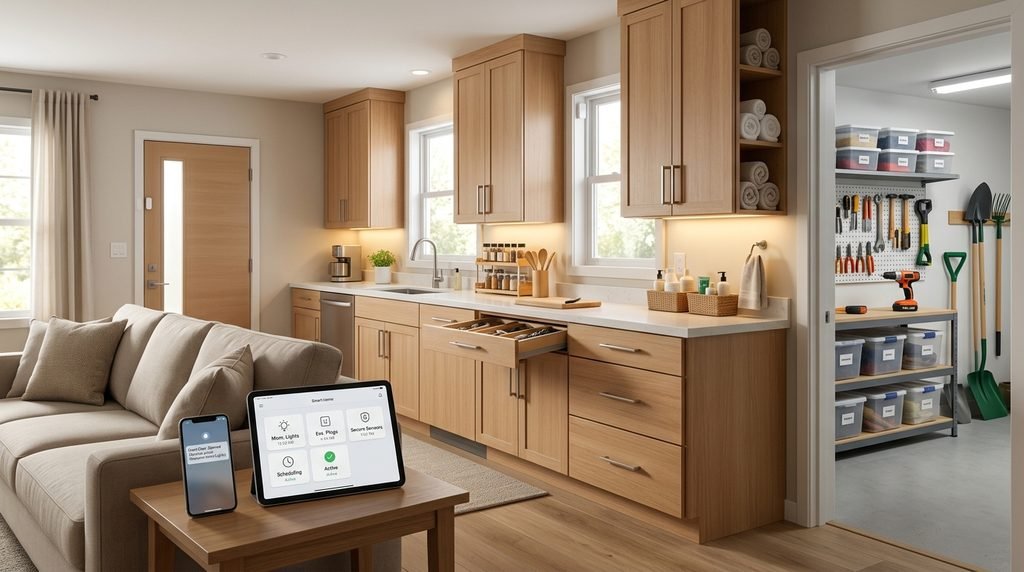
Consider replacing outdated cabinet hardware, adding drawer organizers, improving under-cabinet lighting, installing shelf organizers, or upgrading storage.
Why Small Changes Work
Cabinet handles and drawer pulls are visually noticeable.
Replacing them can create a more modern appearance without replacing the cabinets themselves.
Likewise, better organization can make cooking and cleaning easier.
Budget Advantage
Instead of spending thousands on new cabinetry, focus on the areas that create the biggest day-to-day improvement.
That is the central principle behind budget-friendly home improvement.
12. Add Under-Cabinet Lighting
Under-cabinet lighting can improve both appearance and functionality.
It can provide additional illumination over countertops where overhead lighting may not be sufficient.
LED lighting is particularly popular because it can provide bright illumination while fitting into relatively compact spaces.
Battery-powered and plug-in options can also make installation easier for certain applications.
Why It Is a Strong Upgrade
Lighting can change how a kitchen feels.
A previously dark countertop can become more functional.
At the same time, under-cabinet lighting can provide a modern visual effect.
Best Applications
- Kitchens
- Home offices
- Workshops
- Display shelves
- Storage areas
For renters, removable options can be especially attractive where permitted.
13. Improve Bathroom Functionality With Simple DIY Gear
Bathrooms are another area where inexpensive improvements can make a noticeable difference.
Instead of immediately considering a full renovation, focus on functionality.
Storage shelves, drawer organizers, better lighting, towel hooks, shower organization, and updated hardware can all contribute to a more practical bathroom.
Focus on Storage
Bathroom clutter can quickly make a small room feel even smaller.
Use vertical space where appropriate.
Organize frequently used products.
Keep countertops as clear as possible.
These simple improvements can create a cleaner, more comfortable environment.
Lighting Matters Too
Better lighting can improve visibility and make the bathroom feel more modern.
However, electrical work in wet areas requires particular care.
If an installation involves electrical wiring, use appropriate equipment and professional assistance when needed.
14. Make Your Garage More Functional
For many U.S. homeowners, the garage becomes much more than a place to park a vehicle.
It can become a workshop, storage area, hobby space, or household utility zone.
Unfortunately, garages can also become cluttered quickly.
A budget-friendly garage improvement project can focus on vertical storage, tool organization, lighting, and work surfaces.
Smart Storage Ideas
Use suitable wall storage to get items off the floor.
Create dedicated areas for garden equipment, automotive supplies, tools, and seasonal items.
Label storage containers so you can find items quickly.
DIY Benefit
A more organized garage can also make future DIY projects easier.
When you know where your tools are, you can begin working instead of spending time looking for equipment.
15. Build a Simple Smart-Home Routine
Once you have added a few smart devices, connect them into routines where your chosen platform supports them.
This is where individual products can become part of a larger home-automation strategy.
For example, you might create a morning routine that turns on selected lights.
An evening routine could turn off certain lights and connected devices.
A vacation-related routine might help automate selected lighting.
Start Small
Do not automate everything at once.
Start with one or two useful routines.
Ask yourself which repetitive tasks you perform every day.
Then consider whether automation can simplify them.
Why This Approach Works
Good automation should reduce friction.
If an automation makes your home more complicated, it may not be worth keeping.
The goal is not to have the most smart devices.
The goal is to have a home that works better for you.
How to Prioritize Your Home Improvement Budget
A limited budget does not mean you have to stop improving your home.
Instead, prioritize projects based on impact.
Start with problems you encounter every day.
If your home feels cluttered, organization should come first.
If lighting is inconvenient, consider smart bulbs or motion lighting.
If you regularly complete DIY repairs, invest in better tools.
If temperature management is frustrating, research a compatible smart thermostat.
This approach helps prevent unnecessary spending.
Focus on High-Use Areas
The kitchen, bathroom, entryway, bedroom, and home office often receive significant daily use.
Therefore, improvements in these areas can provide noticeable benefits.
Consider Long-Term Value
Ask yourself how often you will use the product.
A tool used every weekend may provide more practical value than a decorative item used occasionally.
Similarly, a smart device that solves a recurring problem can be more worthwhile than a gadget purchased simply because it looks interesting.
Avoid Buying Technology Just Because It Is “Smart”
Smart technology is useful when it solves a real problem.
A connected device that you rarely use does not automatically represent good value.
Instead, identify the task first.
Then find the technology that can make that task easier.
What to Look for When Buying Home Automation & DIY Gear
Shopping for home improvement products can quickly become overwhelming.
Amazon alone offers an enormous selection of smart devices, tools, organizers, lights, sensors, and accessories.
Therefore, shoppers should evaluate products systematically.
1. Compatibility
Smart devices must work with your existing ecosystem where applicable.
Check compatibility with your preferred platform, smartphone, Wi-Fi setup, or voice assistant before purchasing.
2. Installation
Consider whether you can install the product yourself.
Products with simple installation can be excellent choices for beginners.
However, never attempt electrical or structural work beyond your skill level.
3. Build Quality
A cheap product is not always a good deal.
Look at materials, construction, warranty information, replacement components, and customer feedback.
4. Ease of Use
A product should simplify your life.
Complicated apps, difficult setup procedures, or unreliable connectivity can reduce the practical value of smart-home products.
5. Maintenance
Think beyond the initial purchase.
Some products require replacement filters, batteries, accessories, or other maintenance.
Include these ongoing costs when evaluating value.
6. Reviews
Customer reviews can provide useful information about real-world usability.
However, do not focus exclusively on the overall star rating.
Read both positive and negative feedback.
Look for repeated comments about installation, durability, reliability, compatibility, and customer support.
Why Home Automation & DIY Gear Is a Smart Combination
At first, home automation and DIY tools may appear to belong to separate categories.
In reality, they complement each other.
Home automation improves how your home operates.
DIY gear improves how you physically modify and maintain it.
For example, a cordless drill can help you install shelves for smart-home equipment.
Cable-management tools can improve your connected office.
Motion lights can make a newly organized garage easier to use.
Smart sensors can become part of a broader home-security setup.
Consequently, combining these categories allows you to create improvements that are both practical and technologically useful.
Budget-Friendly Home Improvement Mistakes to Avoid
Even inexpensive projects can become expensive when mistakes accumulate.
Buying Before Measuring
Always measure available space before purchasing shelves, storage furniture, lighting fixtures, or other physical products.
Ignoring Compatibility
A smart device that does not work with your existing setup can quickly become wasted money.
Check specifications before ordering.
Choosing the Cheapest Option Automatically
Price matters, but durability and usability matter too.
A slightly more expensive product that lasts longer may provide better value.
Over-Automating Your Home
Too many connected devices can make your home more complicated.
Choose automation that solves genuine problems.
Forgetting Maintenance Costs
Filters, batteries, replacement accessories, and other recurring costs can affect the real long-term price.
Attempting Unsafe DIY Work
Know your limits.
Painting, organizing, assembling furniture, and many basic projects can be beginner-friendly.
Electrical, gas, structural, roofing, and other higher-risk work may require appropriate professional expertise.
Best Budget-Friendly Improvements by Goal
Different homeowners have different priorities.
Therefore, the best improvement depends on what you want to accomplish.
Best for Convenience
Smart lighting and smart plugs
These upgrades can automate repetitive actions and provide convenient app-based control.
Best for DIY Enthusiasts
Cordless drill and organized tool storage
Together, they create a strong foundation for household projects.
Best for Organization
Modular storage and cable management
These improvements can make existing spaces more functional without major remodeling.
Best for Kitchen Upgrades
Under-cabinet lighting and cabinet hardware
They can improve both appearance and everyday usability.
Best for Security Awareness
Smart door and window sensors
These can provide useful alerts when integrated into a suitable smart-home system.
Best for a Garage
Wall storage, lighting, and DIY organization
These upgrades can transform an underused space into a more functional area.
Best for Smart-Home Beginners
One smart bulb or smart plug
Starting with one device lets you learn the ecosystem before expanding.
How to Shop for Home Improvement Products on Amazon
Amazon can be an excellent place to compare Home Automation & DIY Gear, but shoppers should still research before purchasing.
Start with the exact problem you want to solve.
Instead of searching for “best smart home products,” try a more specific search such as a compatible smart plug, motion light, cordless drill, or storage solution for your intended use.
Then compare important specifications.
Pay attention to dimensions, compatibility, included accessories, power requirements, installation requirements, warranty information, and customer feedback.
Most importantly, do not choose solely based on the lowest price.
A product that costs slightly more but performs reliably and lasts longer may deliver better overall value.
Frequently Asked Questions About Budget-Friendly Home Improvement
1. What is the cheapest way to improve a home?
Some of the least expensive improvements include better organization, updated lighting, cable management, new hardware, storage solutions, and simple smart-home accessories.
The best option depends on the specific problem you want to solve.
2. What should I upgrade first in my home?
Start with areas that affect your everyday life.
If clutter bothers you, improve storage.
If lighting is inconvenient, consider smart or motion-activated lighting.
If you frequently complete repairs, invest in useful DIY tools.
3. Is smart-home technology expensive?
It can be, but it does not have to be.
Smart bulbs, smart plugs, sensors, and similar entry-level products can allow you to begin with a relatively small investment.
You can then expand gradually.
4. What is the best Home Automation & DIY Gear for beginners?
Smart plugs, smart bulbs, basic hand tools, a cordless drill, measuring tape, and simple organization products can provide an excellent starting point.
Choose products that solve problems you already experience rather than buying technology simply for novelty.
5. Are smart plugs worth buying?
Smart plugs can be worthwhile when you want to automate compatible lamps or other suitable devices.
They are particularly attractive because they can add smart functionality without requiring you to replace the connected device.
Always verify electrical compatibility and load requirements.
6. Can I install smart-home products myself?
Many smart-home products are designed for relatively simple installation.
However, installation requirements vary.
Battery-powered devices and smart bulbs can often be simpler than products involving electrical wiring.
When a project involves unfamiliar electrical work, professional assistance may be appropriate.
7. How can I improve my home without spending a lot?
Focus on high-impact, low-cost improvements.
Decluttering, organization, improved lighting, cable management, updated hardware, storage solutions, and selected smart-home accessories can make a noticeable difference.
8. What DIY tools should every homeowner consider?
A basic tool collection can include a screwdriver set, hammer, measuring tape, level, pliers, utility knife, adjustable wrench, and cordless drill.
Add specialized tools only when your projects require them.
9. Are smart thermostats worth the investment?
A smart thermostat can be useful for homeowners who want more control over heating and cooling schedules.
However, compatibility is critical.
Check that the thermostat supports your HVAC system before purchasing.
10. How can I make my garage more useful?
Start by removing unnecessary clutter.
Then add suitable storage, better lighting, tool organization, and a dedicated work area if space allows.
Vertical organization can be particularly useful because it keeps more of the floor available.
11. What home improvement projects can renters do?
Renters can often focus on reversible improvements such as smart bulbs, compatible smart plugs, removable organization products, cable management, portable lighting, and freestanding storage.
Always check your lease before making changes that affect the property.
12. Should I buy expensive DIY tools?
Not necessarily.
Choose tools according to how frequently you will use them and the type of work you plan to perform.
For occasional household projects, a reliable mid-range tool may provide a better balance of price and performance.
13. How many smart devices should I have?
There is no ideal number.
The right number is the number that genuinely makes your home easier to manage.
Start with a few useful devices and expand only when additional automation provides clear benefits.
14. What should I check before buying smart-home equipment?
Check ecosystem compatibility, Wi-Fi or connectivity requirements, power requirements, dimensions, installation requirements, app support, and customer feedback.
These details can prevent many purchasing mistakes.
15. How can I make a small home feel better without remodeling?
Concentrate on organization, lighting, storage, and clutter reduction.
Smart lighting, wall organization, modular storage, cable management, and multifunctional furniture can help a small space feel more functional without requiring a major renovation.
16. Is Home Automation & DIY Gear useful for older homes?
Yes, but compatibility and installation requirements become particularly important.
Older homes may have different electrical systems, wiring, HVAC equipment, or physical layouts.
Always verify specifications before installing smart or electrical equipment.
17. What is the best first smart-home project?
A smart bulb or smart plug is often a simple starting point.
It lets you experience connected control and automation without committing to a complete smart-home system.
18. How do I choose between similar products on Amazon?
Compare specifications rather than relying only on price or star ratings.
Look at compatibility, dimensions, features, warranty, included accessories, recurring costs, and repeated customer comments.
This approach gives you a much clearer picture of overall value.
Final Verdict: Smart Upgrades Without the High Price Tag
Home improvement does not have to be synonymous with expensive remodeling.
With a thoughtful combination of Home Automation & DIY Gear, you can improve your home’s convenience, organization, appearance, functionality, and everyday comfort without tackling a massive renovation.
The 15 ideas in this guide demonstrate how small projects can produce meaningful results.
Smart lighting can make everyday routines easier.
Smart plugs can automate compatible devices.
A cordless drill can open the door to dozens of DIY projects.
Better storage can reduce clutter.
Motion lighting can improve convenience.
Smart sensors can provide additional awareness around selected entry points.
Meanwhile, simple upgrades such as cable management, under-cabinet lighting, garage organization, and improved bathroom storage can make existing spaces work better.
The key is to prioritize.
Do not try to transform your entire home in one weekend.
Instead, identify the problems that affect you most frequently.
Then choose an affordable solution that addresses that specific problem.
This strategy makes home improvement more manageable and helps prevent unnecessary spending.
Furthermore, modern products give homeowners more flexibility than ever.
You can start with a single smart plug, one set of lights, or one useful DIY tool. Once you become comfortable with the technology or project, you can expand your setup.
For Amazon shoppers, the same principle applies.
Do not purchase a product simply because it has a high rating or because it appears popular.
Consider whether it fits your home, your existing equipment, your budget, and your actual needs.
Read specifications carefully, compare alternatives, and pay attention to recurring costs.
Most importantly, choose products that you are likely to use regularly.
A budget-friendly home improvement is successful when it delivers useful benefits without creating unnecessary complexity.
Whether your goal is to build a smarter home, organize a crowded garage, improve your home office, modernize your kitchen, or simply make daily routines easier, the right Home Automation & DIY Gear can help you get there one project at a time.
The smartest improvement is not always the biggest one.
Often, it is the small upgrade that makes your home noticeably easier to live in every single day.